Why I hate the poor
and you should too

I grew up believing I was poor. Not starving-on-the-streets poor. I was a white kid in Canada, with food in the fridge and shoes on my feet. But I didn’t measure poverty by census data, I measured it by comparison. And compared to the Joneses, I felt lack.
One friend had a house twice as big, another the newest console, another a toy car you could actually drive. By the tenth friend, I stopped thinking wow, they’re rich and started thinking maybe I’m the one who’s poor. I began to look at my parents with suspicion. How was everyone else ahead of us?
Even within my own family, some contrasts were glaring.
The Norwood Poor
On my mother’s side of the family, in the tiny town of Norwood (pop 3000), everyone wore a mask of humor. They were hilarious people. Campfires, cheap beer, endless jokes. They didn’t (and still don’t) have internet, so people entertained each other. The humour was mean, biting, sometimes cruel, but always funny.
I loved them. They felt alive in a way the “affluent” side of my family never did. Only later did I realize they were unhealthy, broke, and permanently trapped. But in Norwood, everyone was broke. It just felt normal.
The Peterborough Rich
My father’s side lived in Peterborough (pop 120,000), in a big house with balanced meals and strict rules. They weren’t funny. They policed my elbows at the dinner table, rationed my screen time, and treated candy like contraband. Instead of a family-sized bag of chips, I got a bowl. A bowl! They seemed like prudes.
The story practically wrote itself: my mom’s side was poor but fun, free-spirited, authentic. My dad’s side were rich but uptight, greedy, joyless. Childhood logic has a way of flattening reality into morality tales, and I bought into this one without any good reason to think otherwise.
The Gospel According to My Parents
My parents reinforced this story. They insisted they had done everything right, but life wasn’t fair. The greedy got ahead because they were heartless; the kind, generous and funny lagged behind because they refused to suppress their noble, self-expressive passions, and chose to live “authentically.”
It was persuasive: we were poor because we were good. Others were rich because they were not. For a child, what could be more comforting?
Cracks in the Story
But inconsistencies eroded the edges of my beliefs. Reality has a way of gnawing endlessly at fables, and one either develops profound coping mechanisms to suppress that gnawing, or comes to grips with what reality shows us plainly.
How could my “oppressive” grandparents pay tens of thousands of dollars for my sister’s Rotary Club trip through Europe, while my mother spent the money they sent us for summer soccer clubs on cigarettes and a new car? How could the supposedly “unkind” be the ones sacrificing and saving to pass something down, while the “good-hearted” burned through every dime the moment it arrived, and never had anything to show for it?
Of course, spending isn’t evil. But my family moralized it backwards. Waste was called virtue, discipline was called vice. We were somewhat Nietzschean without knowing it: rejecting the “false idols” of prudence and thrift—celebrating our liberation from the oppressive cultural norm of saving for a rainy day—and praising ourselves for buying a TV on a whim.
I ignored the dissonance as long as I could. But the older I got, the harder it was to sustain the myth.
My foundation of blaming others left me, to be frank, extremely mentally ill. If everything was someone else’s fault, nothing was in my power to change. I wasn’t the main character in my own life; I was a serf in a cosmic caste system, dependent solely on luck; waiting for salvation from outside. Every failure became the fault of “society.” Every stranger who didn’t rescue me or lend help was my oppressor.
The anxiety and depression this bred is hard to overstate. It left me mentally ill, resentful, and fragile, and with few coping mechanisms. Most people around me turned to alcohol, but it didn’t seem very effective.
Somewhere in my second year of university, while studying cognitive neuroscience, I stumbled into the works of Adam Smith, Ludwig von Mises, and Thomas Sowell. Call them free-market extremists, conservatives, whatever. What mattered to me is they provided a systemic lens through which to view economic outcomes, and the more I examined it the more I understood what was genuinely systemic and what was individualistic. Unfortunately for my families cultural myths, almost all the systemic variables were shared among everyone I knew, both within and without the family. We all benefited equally from private property rights, rule of law, peaceful transitions of power, access to cheap consumer goods and free labor markets, etc. Almost everything that determined the relevant outcomes I was concerned with, like access to savings, future income streams, level of education, etc.—couldn’t really be made sense of with vague appeals to society writ large, or even just “luck.”
The truth slowly broke through: my parents weren’t victims of fate. They were victims of their own choices.
Cause and Effect
My paternal grandfather grew up in Powell River (pop 13,000), a paper-mill town not much richer than Norwood. But he left when newspaper demand began falling, and the industry dried up. He pursued education, acquired a skill, and invested in his future. He min-maxed his life with discipline and sacrifice. It paid off.
My maternal uncles, by contrast, grabbed early jobs, maxed out their incomes at twenty, and stayed comfortable in their complacency. They never moved, never invested, never built. When hard times hit, only one side of my family was prepared.
My parents followed the same path. My mother dropped out of high school. My father drank, drove, and crashed cars while high on cocaine. I’m pretty sure my grandpa let it slip out once that he has another family somewhere in the country. Together, they spent every cent on beer, cigarettes, new cars and junk food. I’m not sure whether they were actually persuaded of it—or grew to believe it as a coping mechanism for their own shortcomings—but they told themselves the rich got rich by greed, while the poor stayed poor by virtue.
But the truth was simpler, colder. It was really just cause and effect. They hadn’t invested in their futures. Now that the future was here, they were empty-handed.
Choosing Responsibility
I lived in that lie for ~twenty years—mentally ill, unhealthy, resentful. Until I couldn’t anymore. The reality is, that sort of ‘free-will minimizing’ and hedonistic lifestyle can feel great, but only for a little bit. When you see all your colleagues move on with their lives and start chasing big goals, while you’re still doing the same pleasure seeking, short-sighted activities, the illusion vanishes. Days turn into months and nothing changes. The only things that start to feel good are things you grow tolerant to.
Through the help of many literary role-models, and some distant relatives who let me live with them while I attended therapy, I decided to try a different path: Extreme Ownership, as the navy seal Jocko Willink put it. I began cooking, cleaning, exercising, working more, taking school seriously, and reading. Above all, taking responsibility. Slowly, painfully, with relapses and regressions, I dug myself out of a pit of self sorrow and anxiety.
Only then did I begin to see things clearly. My paternal grandparents, strict and disciplined, had been the ones keeping us afloat all along. My parents, supposedly free spirits, were squanderers. My maternal uncles, supposedly carefree satyrs, were just hedonists too lazy and addicted to cheap thrills to sacrifice today for tomorrow.
The rigid castes I was taught to believe in—rich versus poor, kind versus greedy—were not handed down to us by fate. They were built, brick by brick, out of choices. There is no single switch flipped once in life, but a thousand choices, made daily, compounded over decades. I sometimes use a metaphor that no one chooses to be fat. If there was a light-switch to be obese or not, most would flick it towards healthy. But that’s not the entire story. There is no one decision that’s made and then forgotten. But there are a few dozen small decisions every day. Whether or not to: set an alarm and eat a big enough breakfast so you aren’t snacky, pack healthy meals when you leave the house, keep a healthy contingency snack incase your willpower falters, abstain from buying the junk food you know will be eaten if its in the house, snack between meals, eat late night crunchy carbs, etc., etc. It hardly makes sense to blame any one of these small decisions on society or luck, but in the aggregate, sometimes we do.
This is why I hate the poor. Not because they lack money, but because they lack sovereignty. They invent castes to excuse their failures, retreat into victimhood, and call it virtue. They rob themselves—and everyone around them—of dignity by refusing responsibility. They are side characters in their own stories.
The poor I grew up around were not chained by oppression, but by habits, addictions, and the refusal to sacrifice. To live that way is to be tossed overboard at the smallest ripple in life’s winding river.
Responsibility is liberation. When I began taking responsibility, I ceased being a reed in the wind. I became an agent—constrained, yes—but more free than ever, shaping my own mind, body, and future. I stopped living as a second-class citizen and became player one in my own universe.
Love Life, Hate the Poor
There are (atleast) two ways to respond to life’s inevitable failings. One is to pretend you live in a rigged caste system and nothing is your fault. The other is to embrace responsibility, freedom, and the painful truth that your failures are (mostly) your own.
Goethe put it best in his reply to Prometheus: “Dost thou fancy I should hate life, should flee to the wilderness, because not all my budding dreams have blossomed?”
I choose not to hate life. I choose to love it, and claim it as my own. To live unapologetically, to express myself fully, and to take responsibility for everything, especially my failures. To falter, learn, fail again, and still say: this was mine.
So yes, I hate the poor. I hate their excuses, their self-imposed chains, their cowardly myths. But I love life, and I love the freedom that comes from responsibility. If you want to learn how to live, look at the poor—not to imitate them, but to know what not to do.
Embrace the crushing weight of free-will and personal responsibility. It is freedom.
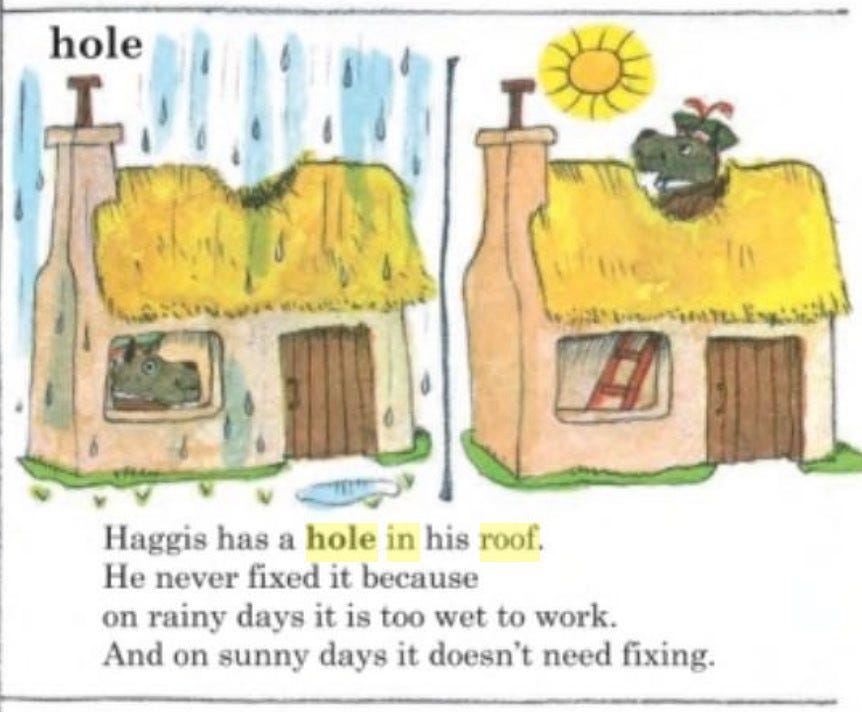
P.S. This entire essay is written as a self reflection on my own life and family, and the world I absorbed growing up. This is not a call to sneer at poor children in Burundi or northern China. Be reasonable.
One Rivulet meeting another, with whom he had been long united in strictest Amity, with noisy Haughtiness and Disdain thus bespoke him, “What, Brother! Still in the same State! Still low and creeping! Are you not asham’d, when you behold me, who, tho’ lately in a like Condition with you, am now become a great River, and shall shortly be able to rival the Danube or the Rhine, provided those friendly Rains continue, which have favour’d my Banks, but neglected yours.” Very true, replies the humble Rivulet; “You are now, indeed, swoln to great Size: But methinks you are become, withal, somewhat turbulent and muddy. I am contented with my low Condition and my Purity.”
— David Hume
Essays Moral, Political, Literary.
ESSAYS WITHDRAWN AND UNPUBLISHED
Essay III
P.S.S. For my communist readers, revolutionary praxis demands enormous individual self mastery, especially in the practical writings of Mao, Lenin, and Engels. Marx admires all of the behaviours I found emancipating so long as it comes from class conscious workers.
Chen Yonggui (the peasant leader of the Dazhai production brigade in Shanxi) was famously held up by Mao during the Great Leap Forward as a model of agricultural self-reliance, and was allowed to give a speech at a party conference in 1964 titled “self reliance is a magic wand.” Don’t let the nihilists black pill you!
Your caveat at the end saying you’re only writing about your personal experience is too little, too late, considering your repeating “I hate the poor” over and over, starting with the title. This clumsy use of a rhetorical device turns what is otherwise an earnest and interesting personal story into clickbait
It’s true on the micro scale that a bit of fiscal responsibility can improve your life. But on the macro scale, I see all the richest people are con artists and the poorest people seem destined to poverty from birth. And you can tell because they all come from the same places (I’m talking about white rural people and black inner city people both - you can tell destiny by where their childhood zip code was in America).
I too grew up in a rich neighborhood, where most families were richer than mine. This was no accident - my parents sought out the rich neighborhood so I could get into a good school. And I’m guessing your parents were similar, so cut them a little slack. Maybe a lot of their wasted money went towards property taxes to afford to live there.
But anyway, I knew a number of rich kids. One sticks out, his dad was a minor business and Republican celebrity in a rather notorious industry that did some good but a lot of harm. The kid lived a privileged life as his dad mismanaged the business into bankruptcy - yet somehow due to some fancy restructuring magic, the kid inherited the business and serves as CEO after his dad’s death (and continues to support Republicans). The rich live by different rules, I can verify that. They can fail, but they don’t face consequences.
Meanwhile I graduated in the recession. I scraped by on odd jobs for about 4-5 years before getting a regular paycheck. I’m frugal and despite my early troubles, my savings are good, though not quite impressive, for someone my age. The years of scraping by were when I worked hardest, and when I made the most it was at the easiest and most fun job I had.
In the years of scraping by, I didn’t just work at the office. I took manual labor tasks too. So I can’t help but laugh as I hear my modern white collar coworkers imagine a happier life in the trades. They’ve never had the very special kind of headache you get from hearing a sledgehammer pound on metal all day, or been woken up by a call at 4 AM to go shovel snow on a freezing cold morning for barely more than minimum wage, or had to struggle to stay awake behind the wheel of a truck doing deliveries in the middle of the night before the shops open. Chair jobs in air conditioned rooms are good jobs.
Sorry for the long reply, just a different view. I love the poor. We are unaware of how much our society depends on them and asks of them.